Showing posts with label #Culinary Collection: Binondo. Show all posts

Saturday, July 24, 2010

Breadworks Bakeshop in Binondo, Manila

In the middle of Binondo, the fort of Southern Chinese influences, we saw a Western themed bake shop! To cap off our trip, we had some sylvannas as our panghimagas.

To end my first food trip to Binondo, I revisited some history of the place:
The word Binondo came from the word binundok which means mountain or boondocks.

Binondo is the center of commerce and trade for all types of businesses run by Chinese merchants. While Binondo was officially declared by a Spanish Governor in 1954 as a permanent settlement for converted Chinese immigrants, it is said that this district was already a hub of Chinese commerce even before the Spaniards came in 1571.

Prior to Makati, Binondo was the main center for business and finance in Manila for the Chinese, Chinese mestizos and Spanish Filipinos. Before World War II, the banking and financial community which included financial institutions from Britain and the United States were located mostly in Escolta which used to be called the "Wall Street of the Philippines". After the war most of these businesses began to relocate to the newly developing area of Makati.

During the financial crisis of the early 80s, Binondo earned the nickname "Binondo Central Bank" as Chinese businessmen in the district engaged in massive black marketing of US dollars, often dictating the actual Peso-Dollar exchange rate. The term has survived to this day.

Given its rich history and financial significance, Binondo is said to have one of the highest land values in the entire country. (Source)
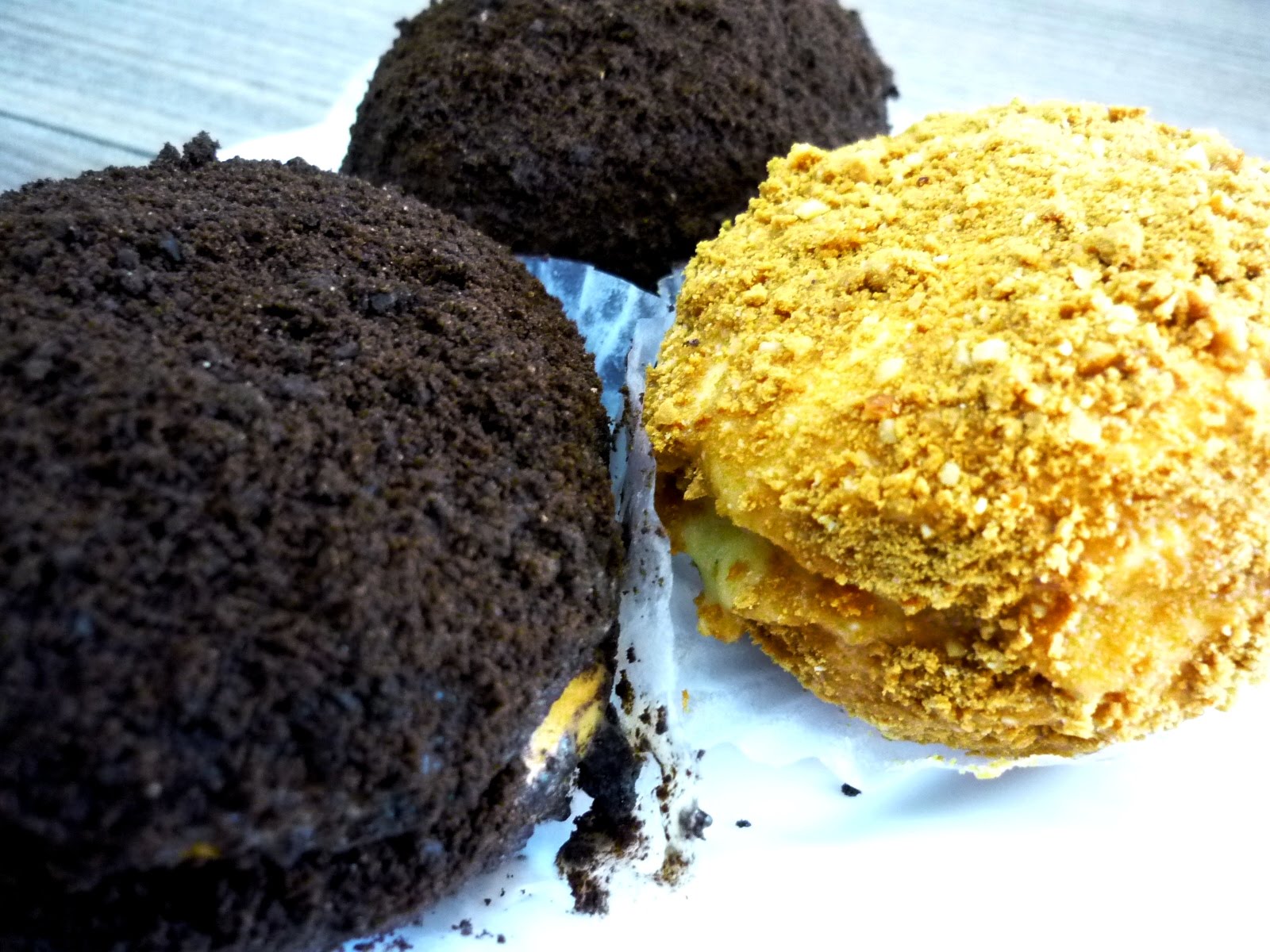
Sylvannas for Php 28 a piece

Their sylvannas had just the right sweetness, and the meringue is not too hard.

Breadworks
817 Salazar Street
Binondo, Manila
Philippines

Friday, July 23, 2010

Masuki Mami Restaurant in Binondo, Manila

Masuki was established in 1930 - Chinatown's first mami house. It was previously called Ma Mon Luk, but labour problems forced it to change its name. According to this (props to the researcher!), Ma Mon Luk was a Cantonese teacher who arrived in Manila in the 1920s. He set up a kitchen that served mami and siopao. The Filipino word "mami" was allegedly attributed to him. Mi means noodles, and mami means "noodles of Mr Ma."

We tasted their top two finds, but we found it lacking. We were later informed that we are supposed to mix the sauce for the food to taste better.

Original Mami for Php 90 - this is the original "Gupit" noodles

Special Siopao - Pork Asado for Php 70


Masuki Mami Restaurant Corporation
931 Benavidez Street
Binondo, Manila
Philippines
Tel: 632 243 26

Thursday, July 22, 2010

Dong Bei Dumplings in Binondo, Manila

I love discovering great holes in the wall, and Dong Bei Dumpling is such. It was in a nondescript area of the street, with a nondescript sign, with its chairs and menu at the verge of dilapidation, the whole fascade almost uninviting and unappetizing. But the bite-size dumplings are juicy and tasty, their xiao long bao bursts with flavor, and their pancake stuffing - I've never tasted anything like it!

Dong Bei means North East. Northern Chinese flavors are less complex and made with lesser ingredients. Chinese food in the Philippines is mostly of Southern influence (geography makes sense), mostly of Cantonese origin (The Pancit Canton is a staple Filipino product)

Dumplings (stuffing: chives, celery, cabbage, pork) 14 pieces for Php 100

Steamed Xiao Long Pao for Php 60

Friend stuffing pancake for Php 100

Stuffing - garlic, pork and chives


Dong Bei Dumplings
642 Yuchengco Street (formerly Nueva)
corner Tytana St
Binondo, Manila, Philippines

Wednesday, July 21, 2010

Gecko Lizard tea from Ban Shiong Thay Chinese Drug Store

We dropped by Ban Shiong Thay Chinese Drug to check out the Gecko Lizard that is made famous by Ivan Man-Dy's Binondo food trip. Ma'am Rose, owner of the store, explained to us that if we boil the female and male gecko lizard together with ginger, it is proven to increase sperm count and improve sperm motility. The tail is most potent part of the lizard.

Php 45 a pair if I am not mistaken?

Obviously this is not for me, but one day perhaps I can muster the courage to drink some lizard tea of sorts.

Ban Shiong Thay Chinese Drug Store
633 Yuchengco Street
Binondo, Manila, Philippines

Tuesday, July 20, 2010

Binondo Church and Cafe Mezzanine, Binondo, Manila

The main Binondo Church is only 32 years old (note the clean marble pillars and white cement ceilings in photo below) but the land mark is 400 years old. The bell tower (photo below) is the only structure that stood amid the bombings and natural disasters slapped by time. The reconstruction of the present church was funded by the Catholic Chinese community, many of whom reside or operate businesses in the area. *

The church is now a national shrine and a basilica minore for San Lorenzo Ruiz, the first Filipino saint who was born in Binondo.*

The new and the old

Gatekeeper

Marble pillars and white ceilings (painted ceilings, actually, ala Michelangelo)


Our first stop was Cafe Mezzanine, the only themed cafe in the area. It was designed with the volunteer firemen in mind. After the war, Chinatown was victim to devastating fires. The government was slow to respond to these fires forcing the Chinese Filipinos to form groups of volunteer fire brigades. Today, these brigades are not only located in Chinatown but also in other parts of Metro Manila. Patronizing Mezzanine Cafe means donating to these volunteer fire brigades.*

Notice the hats on the right hand side. I love how they renovated the place.

Special Kikiam for Php 65

Special kiampong for Php 48 - I loved this!! Not too salty but uber sticky.

Spicy pork in Ube Pao for Php 45 - I loved this! The pao was warm and soft, the spicy pork was spicy at the right ante! I brought extra ones for home


Café Mezzanine
650 Ongpin cor. Yuchengco Street,
Binondo, Manila
Philippines


Monday, July 19, 2010

Pasig Ferry Ride and Lumpia from New-Po Heng, Binondo, Manila

The Pasig River was an important transport route in Spanish Manila (before 1898), as well as a source of livelihood for small time fishers, and venue for leisure for swimming children. After the World War 2, massive population growth, infrastructure construction, negligence and industrial development plagued the river, so when the 90s rolled along, the river was declared ecologically dead. Increasing pollution was noticed when the fish migration from Laguna de Bay (another major body of water connected to Pasig River) diminished. In 1989, a rehab commission was set up to restore the river.

We spent the better part of Saturday morning in the Pasig Ferry enroute from Guadalupe to Escolta. We entered a simple yet functional ferry station (no space wasted!), was serviced by efficient staff, and was led into the boat that arrived on time (10:06 and not a minute more - helps that there is no traffic!). The boat had comfortable seats, was airconditioned, and had a flat screen tv that featured a Thai film (Nurturing culture in Filipinos! Good job.). I was surprised that a lot of people still used the ferry as mode of transport.

The comfortable ride lulled me to sleep but I woke up in time to see the landmark sites like the Malacanang and the Quiapo bridge.

Guadalupe to Escolta one way ride for Php 45

It was another big surprise seeing the original Manila Post Office right across the dock. I truly believe that Old Manila has beautiful architecture, it's only a matter of maintaining cleanliness and order around it.


We went to the New-Po Lumpia House inside the beautiful Art Deco Building to try out some of the famous fresh lumpia.


Lumpia for Php 45

I could taste the freshness of the ingredients, through is juicy chunks.

Other items in their menu come in huge servings:

Misuo Guisado for Php 60
Misuo Soup for Php 40
Maki Soup for Php 55


Nobody designs like this anymore! Evokes 70s architechture.


New-Po Heng Lumpia House
Uy Su Bin Building
(inside art deco building)
531 Quintin Paredes St.
Binondo, Manila
Philippines